
Dubai Marina Pontoon and Steel Piles Assessment
The Problem
Dubai Marina is a major waterfront development in Dubai comprising extensive berthing and floating infrastructure exposed to continuous seawater, tidal and splash-zone conditions. A condition assessment was undertaken across several locations, including Dubai Marina Yacht Club, East Marina, West Bay Marina and Dubai Marina Mall, covering concrete pontoons, wooden pontoon elements and supporting steel piles.
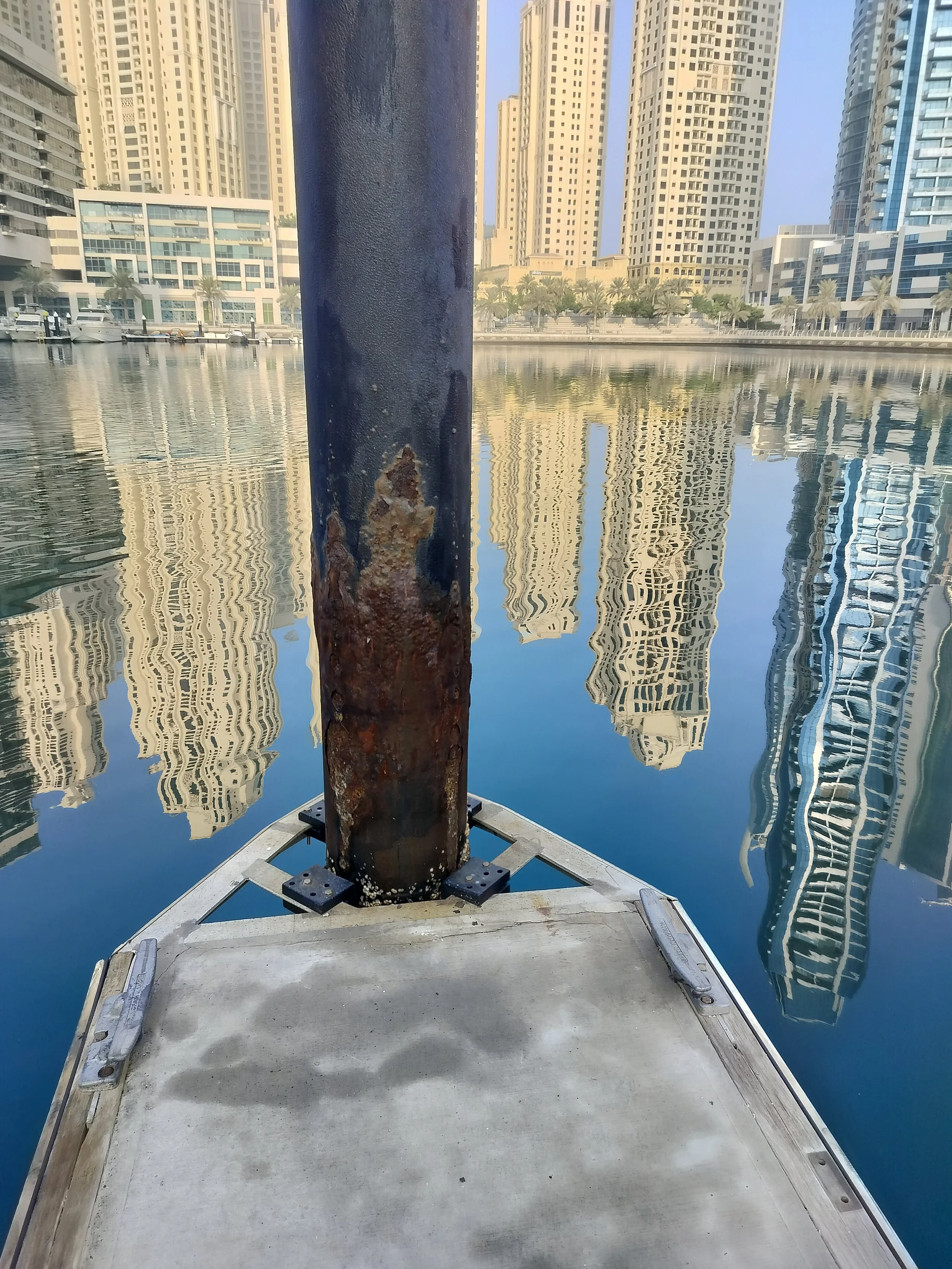
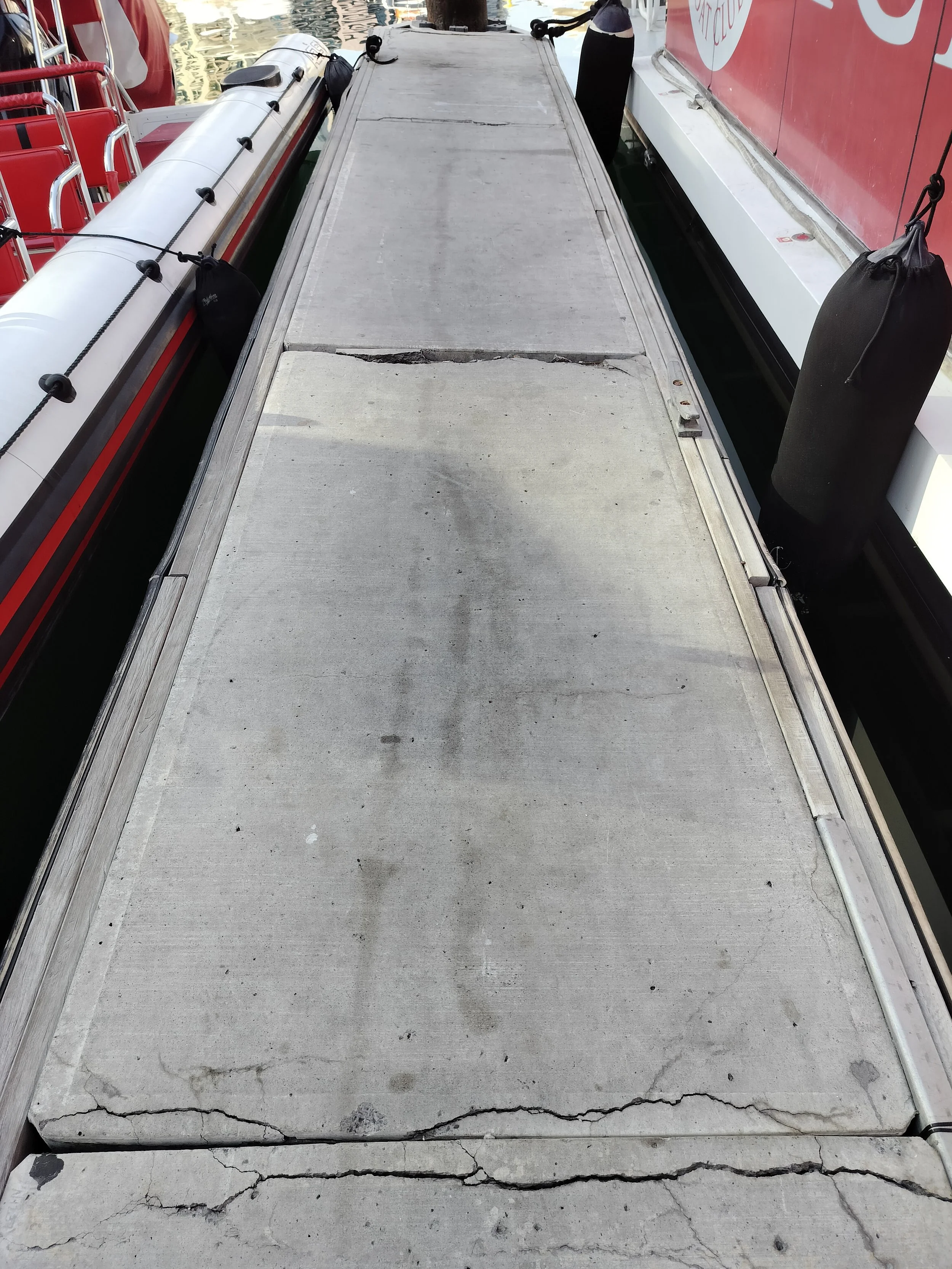
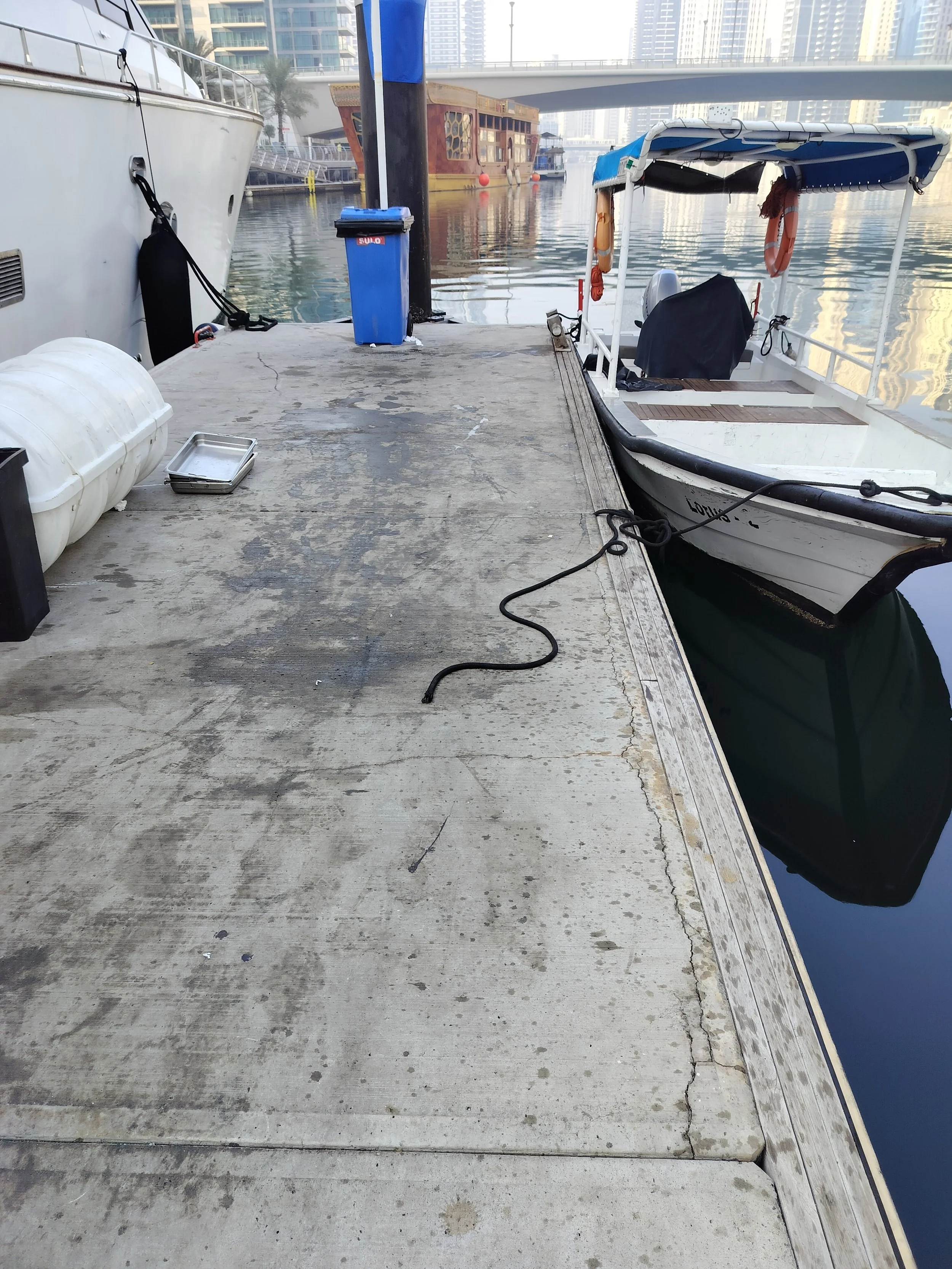
The investigation identified deterioration across all three asset types. Concrete pontoons exhibited cracking, delamination, spalling, exposed reinforcement and localised surface loss. Wooden elements showed rot, decay, damaged planks and deterioration around connections and fastenings, while steel piles exhibited coating breakdown, rusting, pitting, flaking and localised section loss. Marine growth, damaged edge protection and loose or missing components were also observed, affecting the durability and serviceability of the marina infrastructure.
.
The Solution
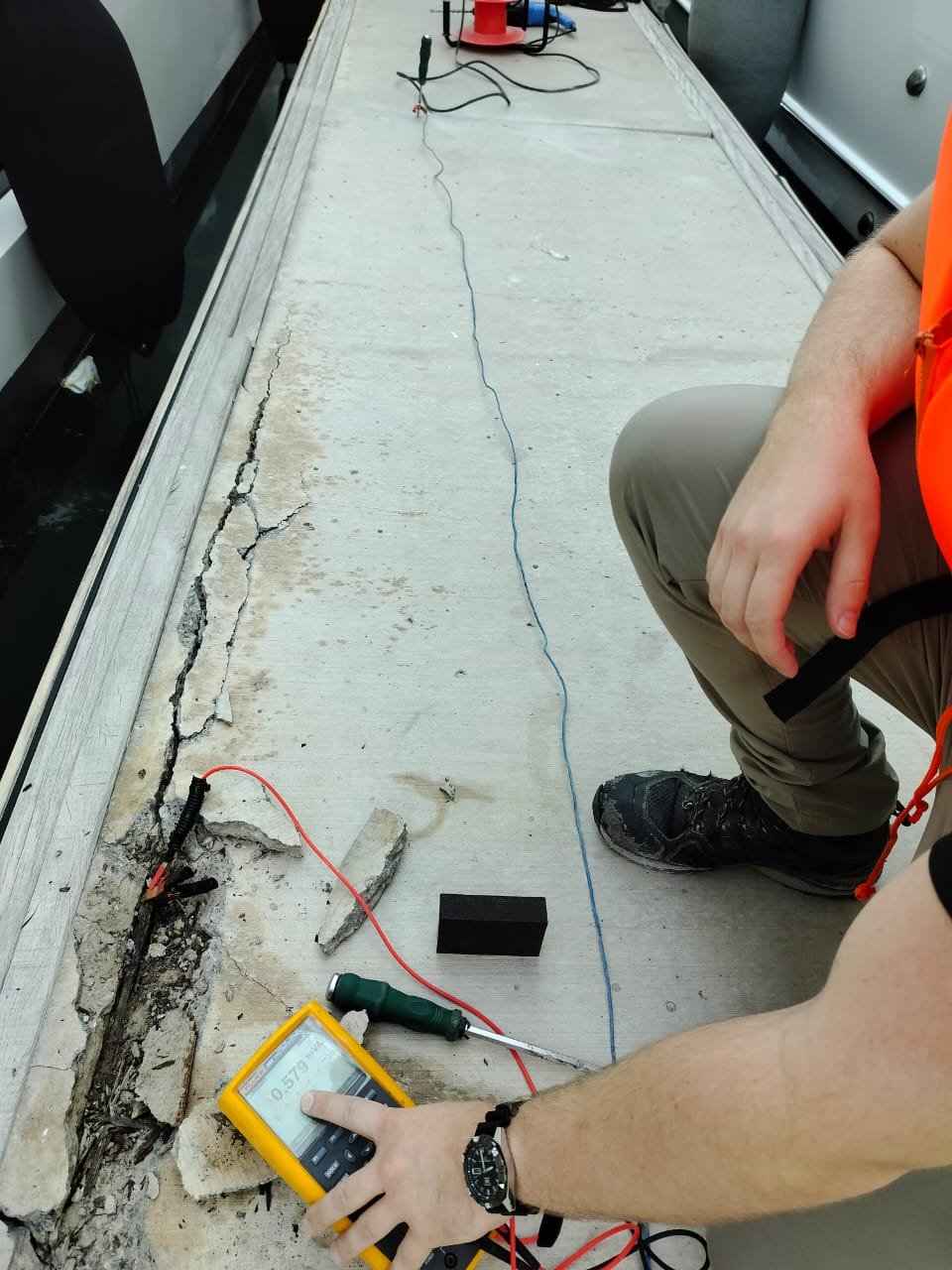
Corrosion potential testing of reinforced concrete elements.
Vector Corrosion carried out a comprehensive condition assessment using visual inspection, condition mapping, non-destructive and destructive testing, material sampling and underwater inspection.
The investigation included:
Visual condition assessment
Defect mapping survey
Ground Penetrating Radar (GPR) scanning of concrete pontoons
Half-cell corrosion potential testing of reinforced concrete elements
Delamination and hammer sounding surveys
Ultrasonic Thickness (UT) testing of steel piles to assess section loss
Chloride sampling and testing
Inspection of timber elements for rot, decay and connection deterioration
Underwater dive surveys of submerged structural components
Environmental assessment of the marine exposure conditions
Chemical analysis of selected fixing rods and bolts
The investigation identified the extent and mechanisms of deterioration and was used to develop targeted rehabilitation recommendations for the different structural materials. These included localised concrete repairs, timber repair or replacement, renewal of protective coatings, corrosion protection of steel piles, cathodic protection and galvanic anodes where appropriate, and replacement of components where deterioration was extensive.
The Result
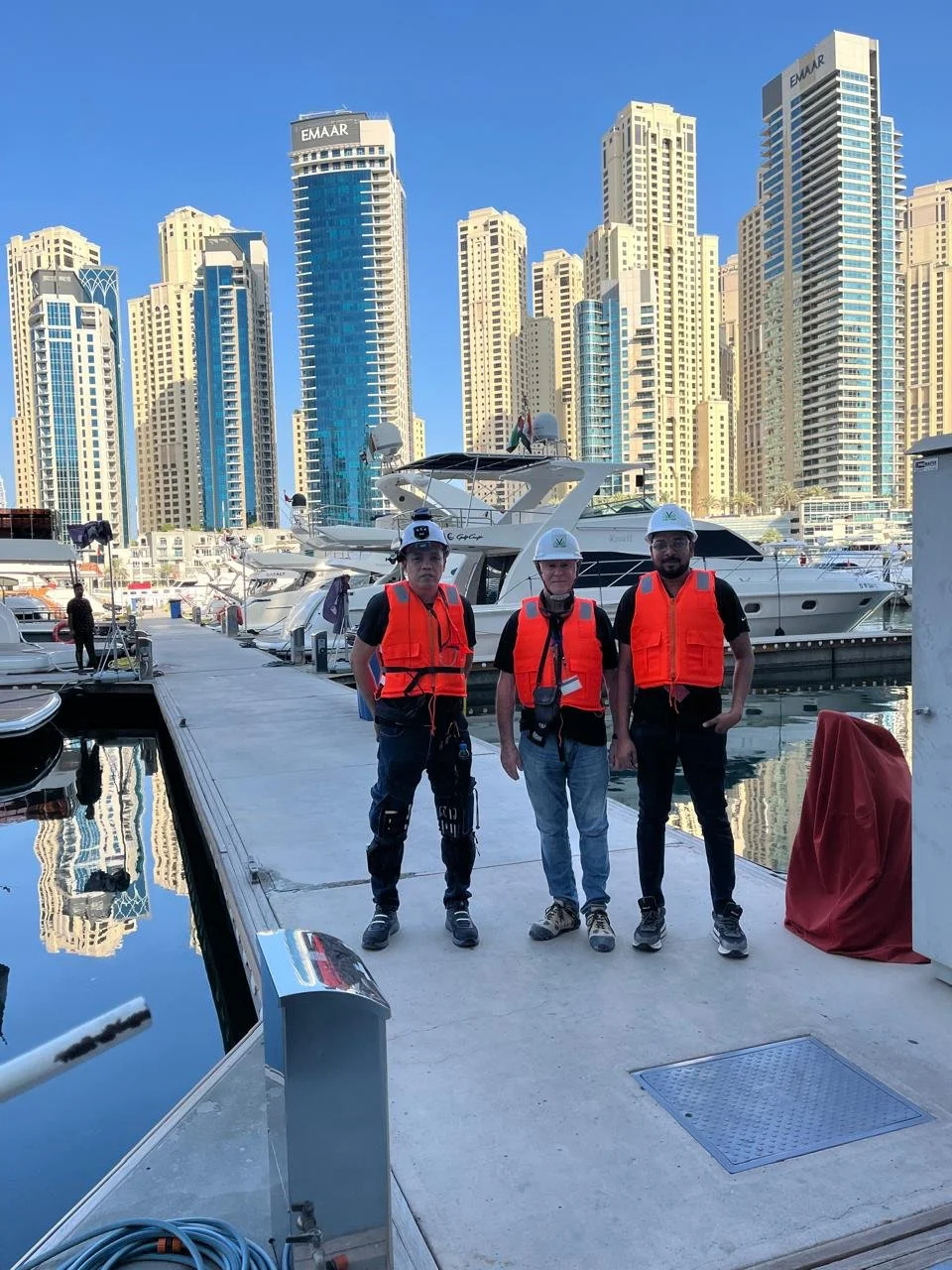
The Vector Corrosion team at Dubai Marina.
The assessment confirmed that the marina infrastructure requires prompt rehabilitation and preventive maintenance to protect users, restore reliability and extend asset service life. Concrete pontoons showed widespread localised deterioration, wooden elements exhibited accelerated decay and connection-related defects, and the steel piles were affected by marine corrosion, coating breakdown and splash-zone deterioration.
Chloride testing indicated a high corrosion risk within the reinforced concrete elements, while the underwater survey confirmed the absence of cathodic protection below the waterline in the inspected areas. These findings established the basis for targeted rehabilitation and corrosion mitigation measures across the marina assets.
Timely intervention will be necessary to address the identified deterioration, preserve structural integrity and marina functionality, and support the long-term value and serviceability of the infrastructure.